How to choose an abstract painting for your living room
Size in relation to the wall and the sofa, colours that talk to the room and the right light for a painting with relief.
Start with the wall, not the painting
It is tempting to fall in love with a work first and only then ask where it will go. That often works out, but you avoid surprises by doing it the other way round: start by looking at the wall where you picture the painting. Measure the usable width between doors, windows, sockets and corners, and notice what sits below it: a sofa, a sideboard, a bed or nothing at all.
Think, too, about where it will be seen from. A wall you see from the living room door calls for a work that holds its own at a distance; a wall beside the dining table will be seen close up, for hours at a time, and there texture and detail become much more important.
Size: the two-thirds rule
A simple guideline used by many interior designers: above a piece of furniture, the painting (or group of paintings) should take up roughly two-thirds to three-quarters of the width of that piece. It is not a law, but a starting point that avoids the two most common mistakes: the painting that is too small and looks lost, and the one that is too big and overwhelms the furniture.
- A 200 cm sofa: ideally, a total width of 130 to 150 cm.
- A 120 cm sideboard: a canvas 70 to 90 cm wide looks balanced.
- A bare wall with no furniture: leave at least 30 to 40 cm of wall all around the work.
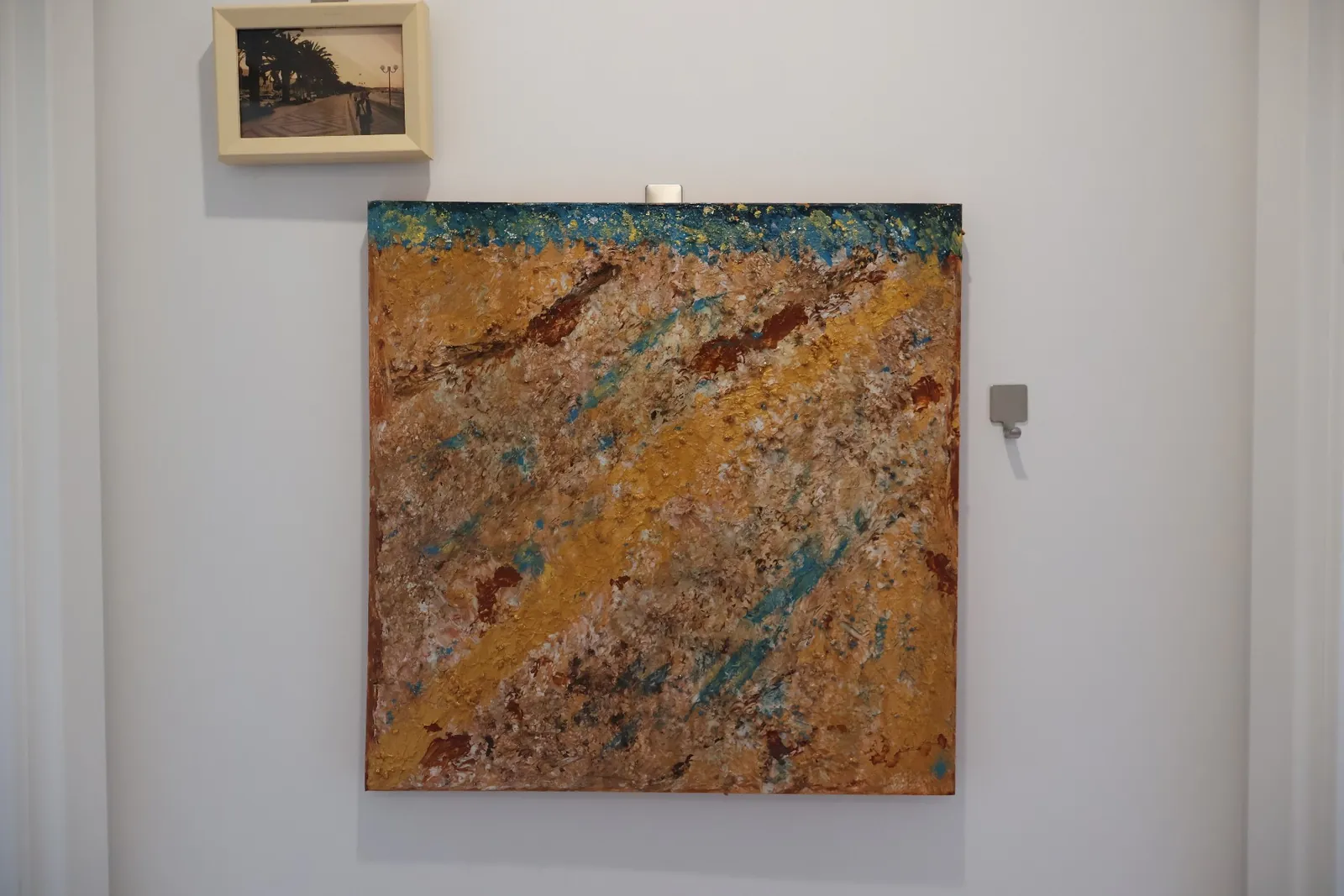
On its own above a 200 cm sofa, a 60 × 70 cm canvas looks a little small. There are two good solutions: hang two canvases side by side, 8 to 10 cm apart, which gives a total of about 150 cm, or choose a narrower wall for that canvas, such as in a hallway, above a sideboard or beside a window. You can see every work to scale, next to a 200 cm sofa, in the “See it on your wall” section of each work’s page, under Works.
Make a paper template before you decide
This is the most useful tip in this guide. Cut a sheet of brown wrapping paper or kraft paper to the exact dimensions of the work and fix it to the wall with masking tape, which will not damage the paint. Leave it there for two or three days. You will soon see whether the size is right, whether the height works and whether the wall is asking for something bigger or more understated. It costs next to nothing and saves a great deal of second-guessing.
Colour: echo, contrast or calm
You do not need to match the painting to the cushions. There are three approaches, and all of them work:
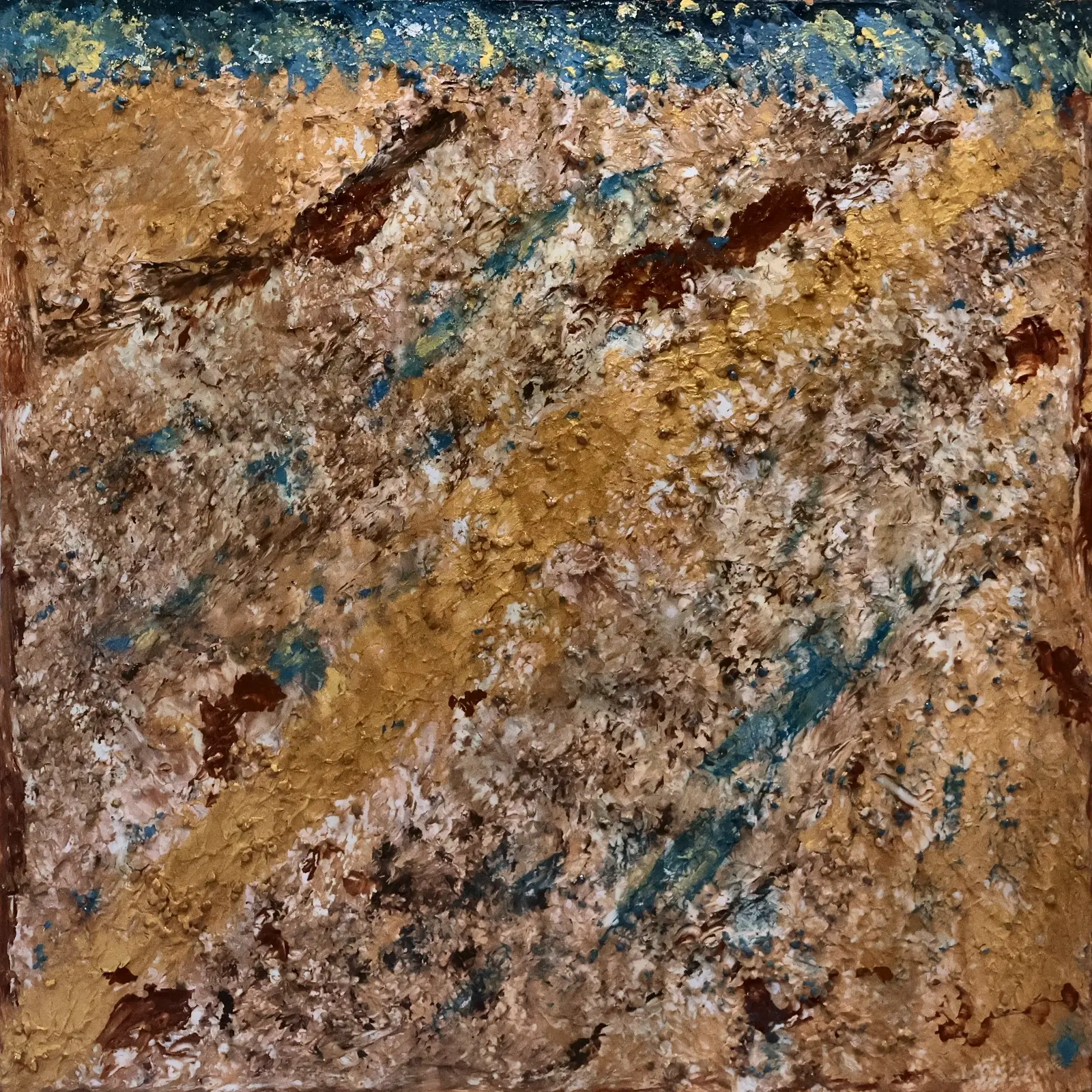
- Echo: choose a work that picks up a colour already in the room, in a rug, a throw or the wood of the floor. The sand, earth and copper tones of “Vein of Gold”, for example, sit naturally alongside wood, linen and clay.
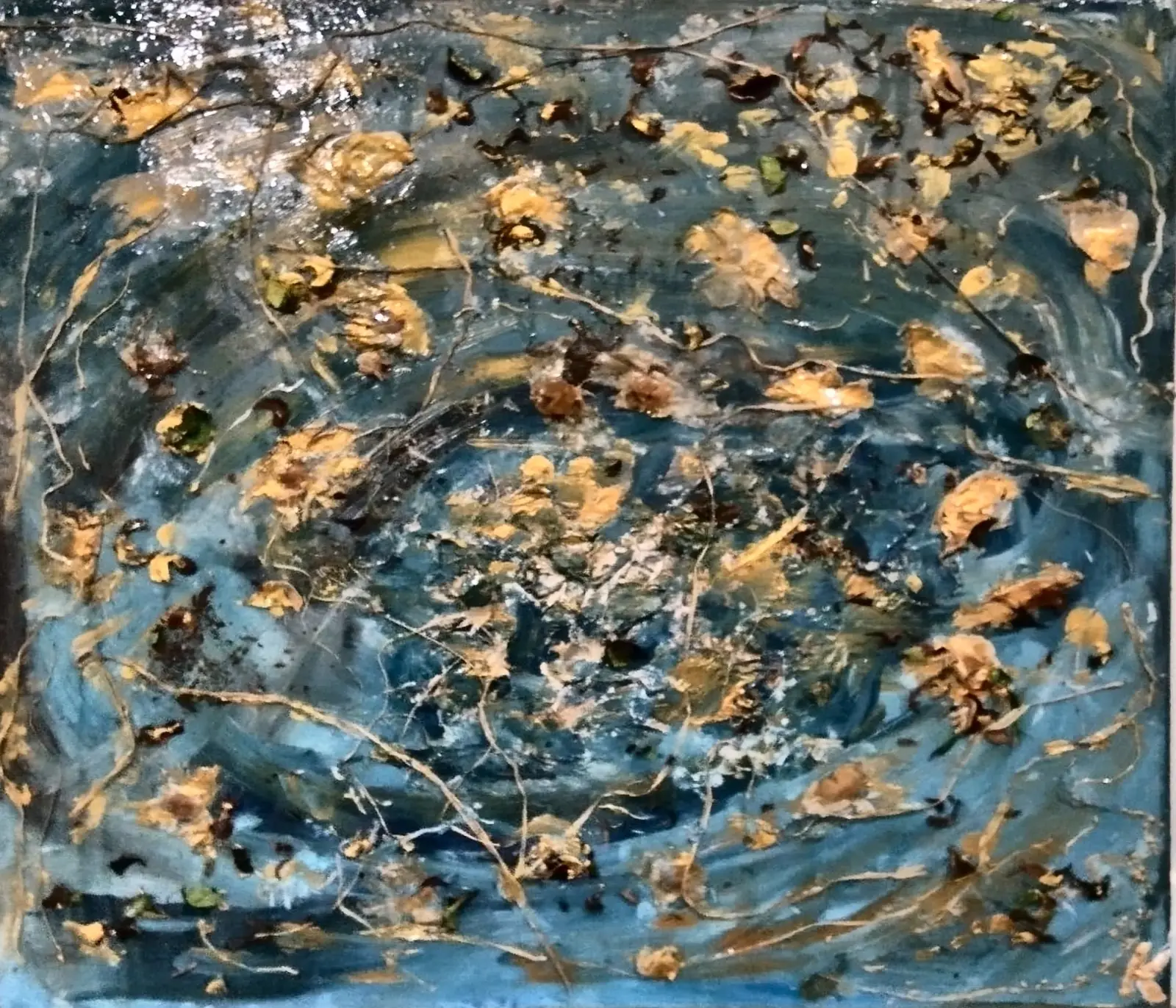
- Contrast: in a room with neutral tones, a work with a strong colour becomes the focal point of the space. An intense blue, like the one in “Autumn Tide”, on a beige or white wall draws the eye without any effort.
- Calm: if the room already has a lot of pattern, go for a work with few colours and plenty of texture, which brings interest without adding noise.
Light: relief comes alive with it
A painting with relief changes throughout the day. Raking light, which comes in from the side, casts small shadows from every ridge and gives the surface depth; flat, even light from the front makes it look flatter. If you can, choose a wall that receives light from the side, from a window or a floor lamp.
Two words of caution. Works with a glossy varnish can reflect the light if they hang directly opposite a window: try the paper template at different times of day and see where reflections appear. And avoid direct sun on the canvas for hours on end, which fades the colours over the years. We explain why in our guide How to care for a varnished acrylic painting.
In the end, trust what you feel
Measurements and colours help you avoid mistakes, but they cannot do the choosing for you. If a work makes you stop every time you walk past it, that counts for more than any rule. An abstract painting does not have to depict anything: it just has to say something to you. If you would like to think about this at your own pace, read How to look at abstract art. And once you have found the right spot, the guide How to hang a 60 × 70 cm canvas shows you how to fix it securely.