How to care for a varnished acrylic painting
Dust, sun, damp and cleaning: the little that a varnished acrylic painting needs to stay beautiful for many years.
Durable, but not indestructible
Once dry, acrylic paint forms a flexible, stable film that does not yellow like some older oil paintings and copes well with normal household conditions. The varnish adds a protective layer against dust and dirt and evens out the sheen. All this makes a varnished acrylic painting an easy work to look after. Easy, but not indestructible: the care described below is minimal, but it makes a real difference over the years.
Dust: a soft brush is all you need
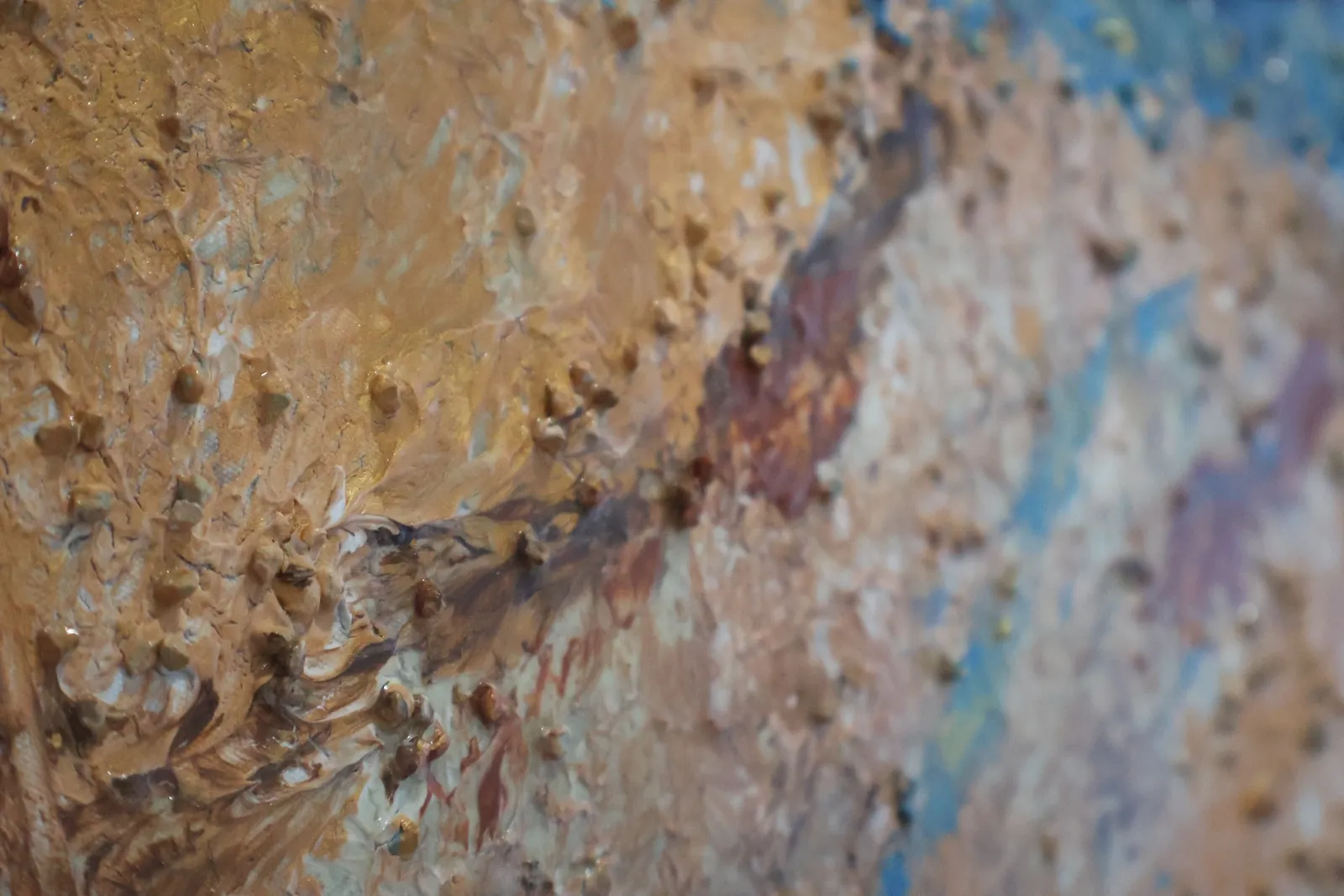
Every few weeks, run a wide, soft brush over the surface, dry and clean (a new make-up brush or pastry brush will do), with light strokes from top to bottom. On works with a lot of relief, the brush gets into the hollows that a cloth cannot reach.
- Do not use feather dusters: they can leave strands caught in the texture.
- Do not use microfibre cloths on heavily textured surfaces: they snag on the ridges.
- Do not blow on it: saliva and the moisture in your breath leave marks.
No water and no cleaning products
Never clean the painting with water, glass cleaner, alcohol, wet wipes or any household product. Even with varnish, these products can dull the sheen, leave marks or get into tiny flaws in the surface. If the work picks up a stubborn stain, grease or smoke, do not try to deal with it yourself: talk to us or to a professional conservator-restorer.
Sun and heat
Natural light looks beautiful on a painting, but direct sun for hours on end, day after day, fades the pigments over time. Choose walls that receive indirect light, or curtains that filter the sun at the times of day when it is strongest.
Also avoid hanging the work above fireplaces, radiators or air-conditioning units, or near the outlet of a cooker hood. Heat and moving air dry out and soil the surface, and sudden changes in temperature make the canvas stretch and shrink.
Humidity
The canvas and the wooden stretcher react to humidity: with too much, the canvas can go slack and the wood can warp; with too little, the canvas can become overly taut. Bathrooms, kitchens and cold outside walls, where condensation forms, are not good places for a painting. In an ordinary bedroom or living room, there is nothing to worry about.
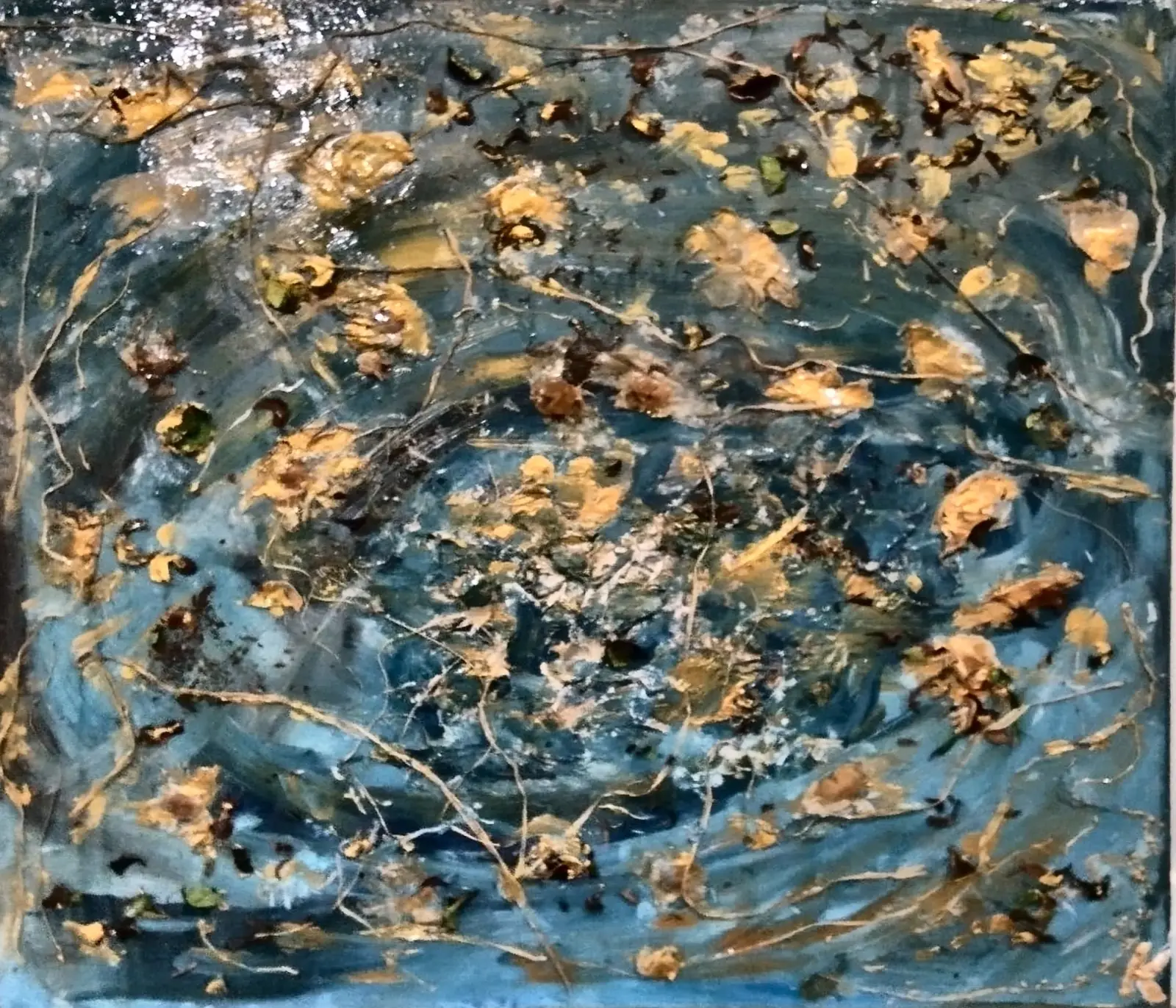
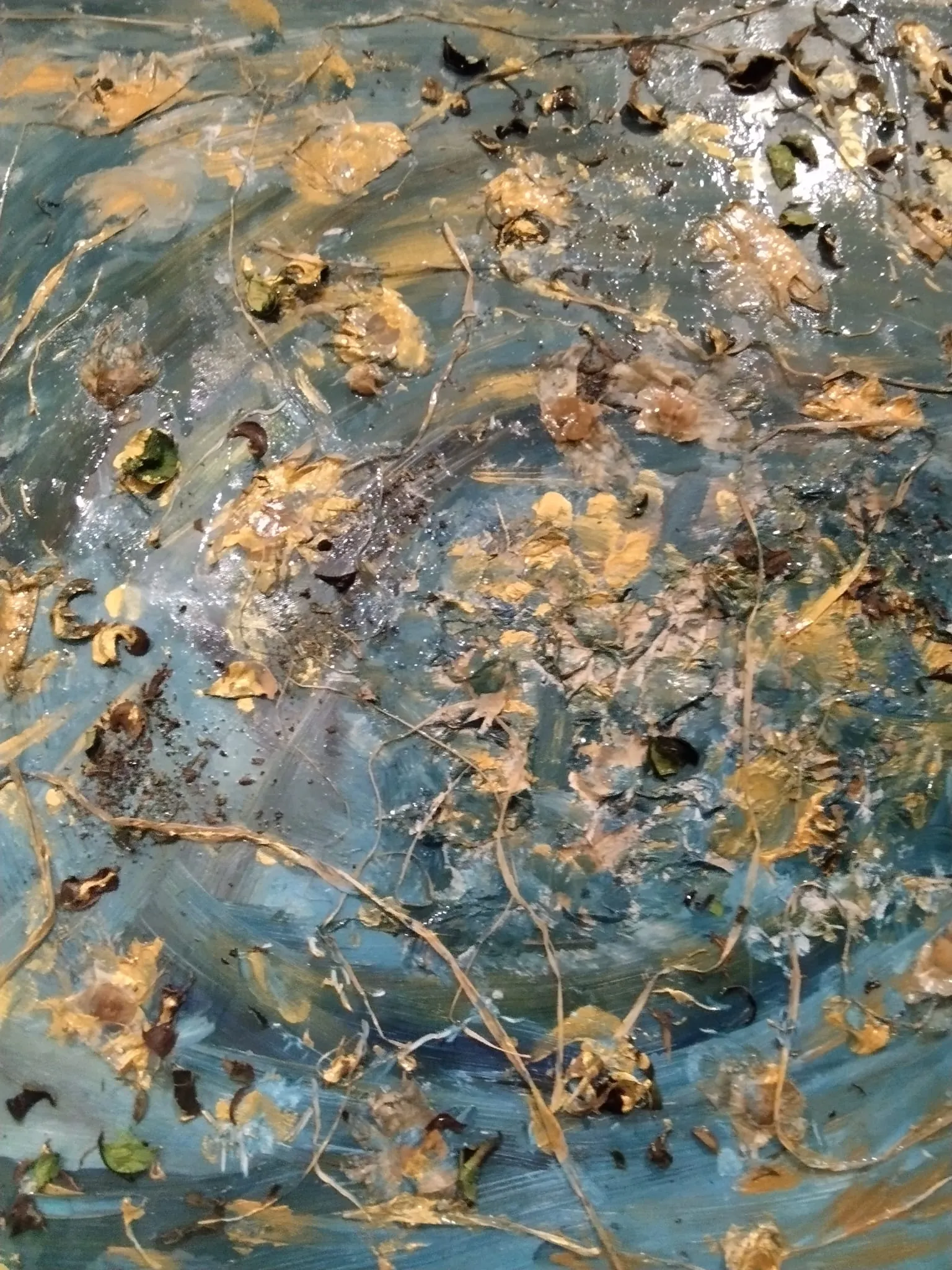
For works that incorporate natural elements, such as leaves, petals or threads held in the paint, this applies twice over: they are protected by the varnish, but they prefer a dry, stable environment.
Handling, moving and storing
Always pick the canvas up by the sides of the stretcher, with clean, dry hands, and never by the front or by the centre of the back, where the canvas gives. Do not lean anything against the painted surface.
If you need to store it, wrap it in acid-free paper or a clean cotton sheet, with no plastic in direct contact with the painting, as plastic traps moisture. Store it upright, in a dry place, never lying flat with weight on top of it or leaning face-first against other works.
What if something happens?
A scratch, a dented corner, a leaf that has come loose: do not glue it, do not paint over it, do not rub it hard. Take a photograph and write to us through the Contact page. We will tell you what to do. And if the work arrives damaged in transit, follow the steps on the Buying and shipping page.