How to look at abstract art
There are no right or wrong readings. Simple ways to look at colour, texture and movement, and to discover what a work says to you.
There is no right answer
Standing in front of an abstract painting, many people feel that they ought to understand something and that they do not. It is a very common feeling, and there is no reason for it. An abstract work is not hiding an image that you have to guess, nor does it carry a single message that only experts are able to read. It is a combination of colours, shapes, textures and gestures, and what happens between the work and the person looking at it is different for each of us.
Karla puts it better than we can:
I believe art has no single interpretation. Everyone sees something different in a painting, finds their own emotions in it and discovers meanings that others might not.
I create freely. Everyone is free to find their own story in what I paint.
Karla
Start with what you feel, not what you think
Before you look for a meaning, notice your first reaction. Does the work calm you or unsettle you? Does it draw you closer or ask you to keep your distance? Does it remind you of a place, a season of the year, a temperature? There are no wrong reactions. If you feel nothing at all, that is a valid response too: perhaps that work is not for you, and another one will be.
Look from a distance, then up close
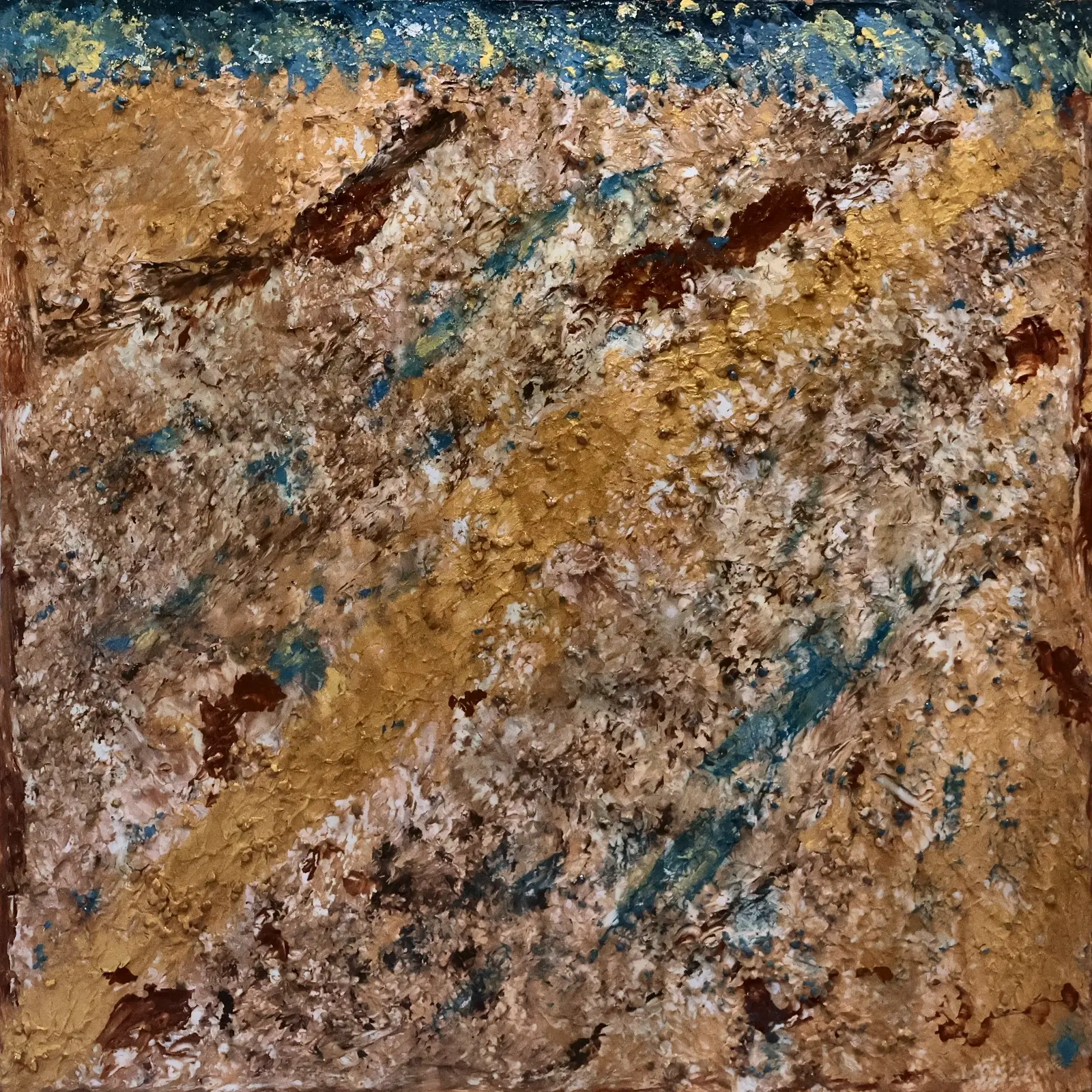
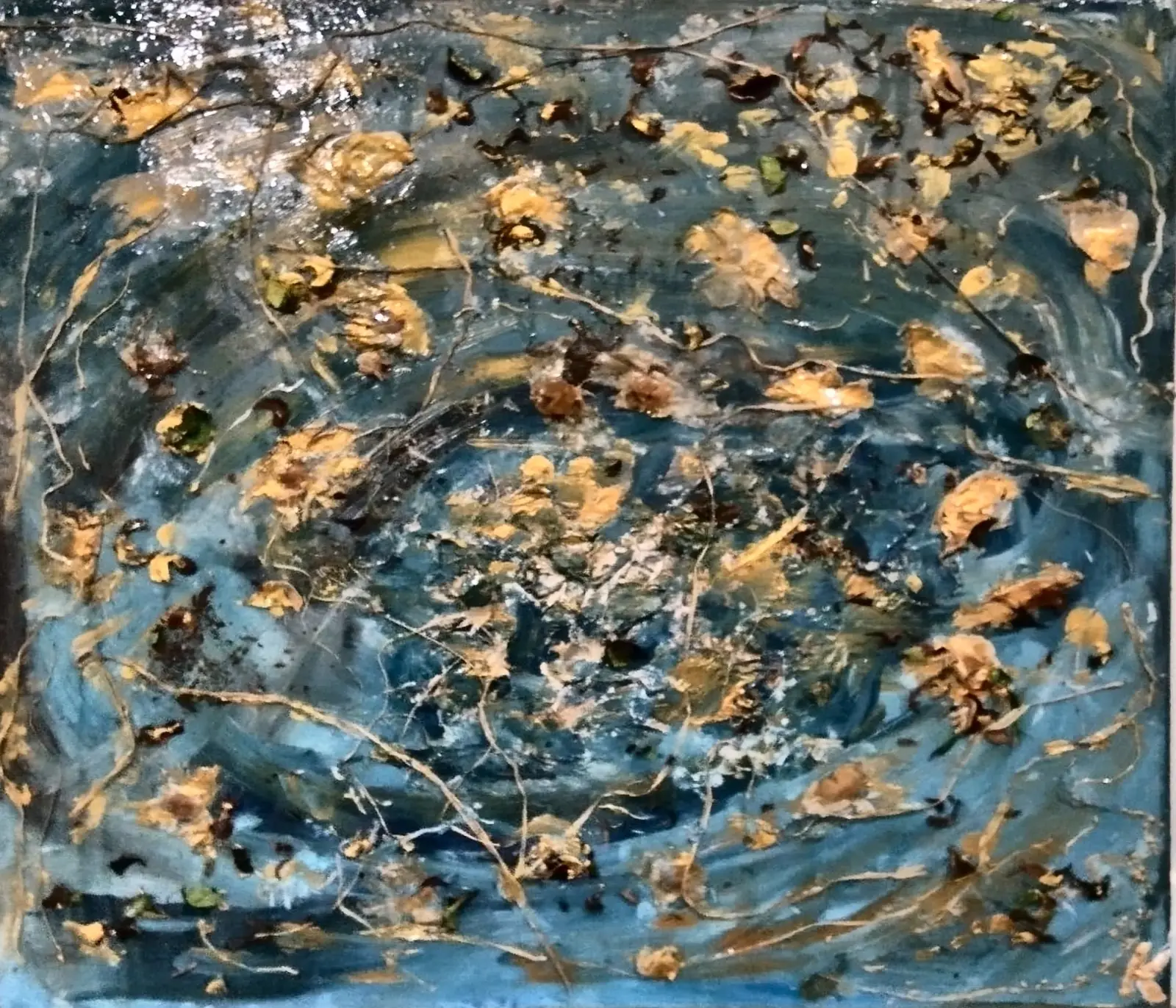
An abstract painting often has two lives. From a distance, you see the composition: where the lines are heading, where the weight lies, whether there is a centre or whether everything spreads outwards. In “Vein of Gold”, for example, a band of gold crosses the canvas diagonally and gives it a sense of direction. In “Autumn Tide”, everything swirls around the centre.
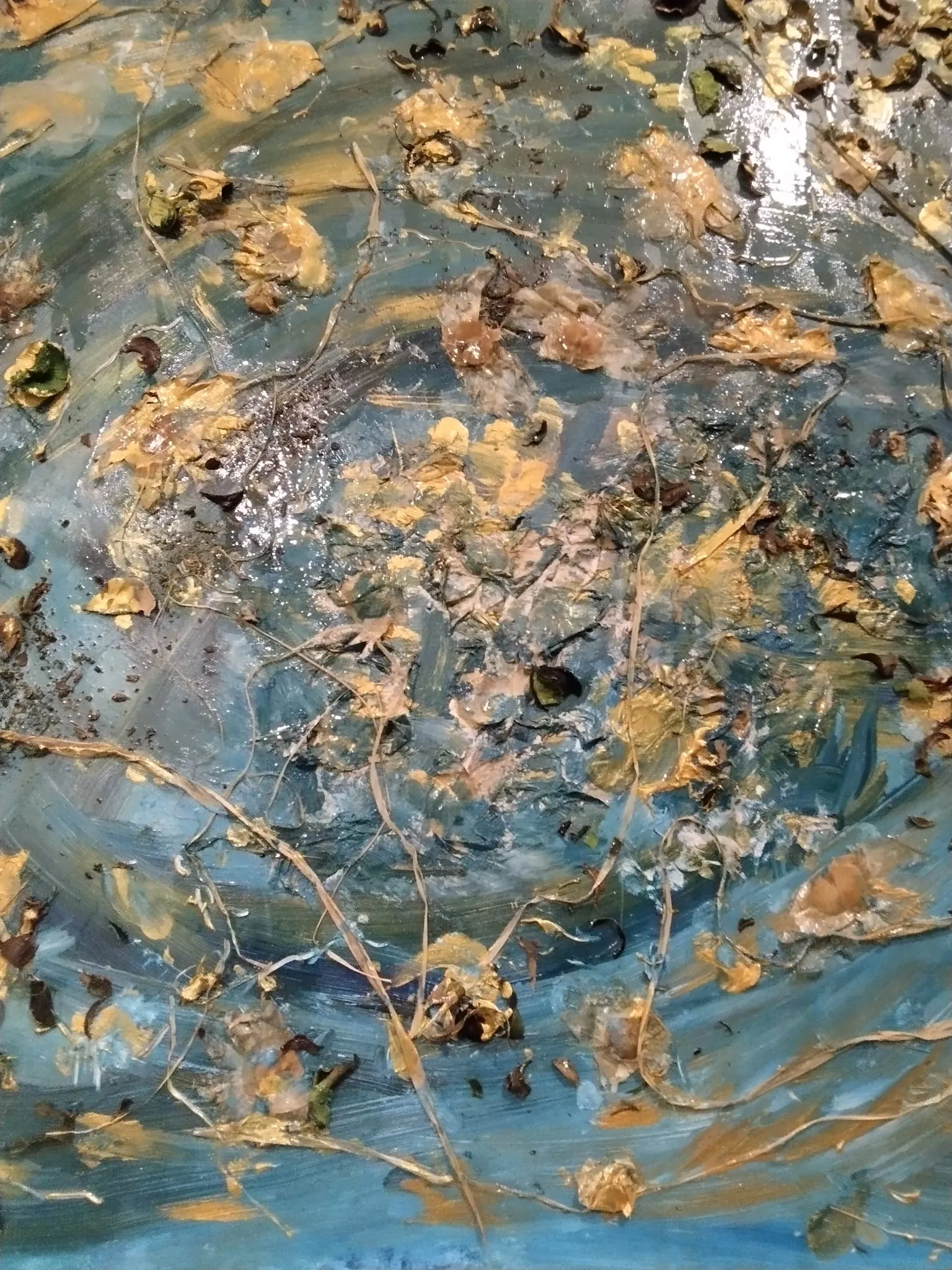
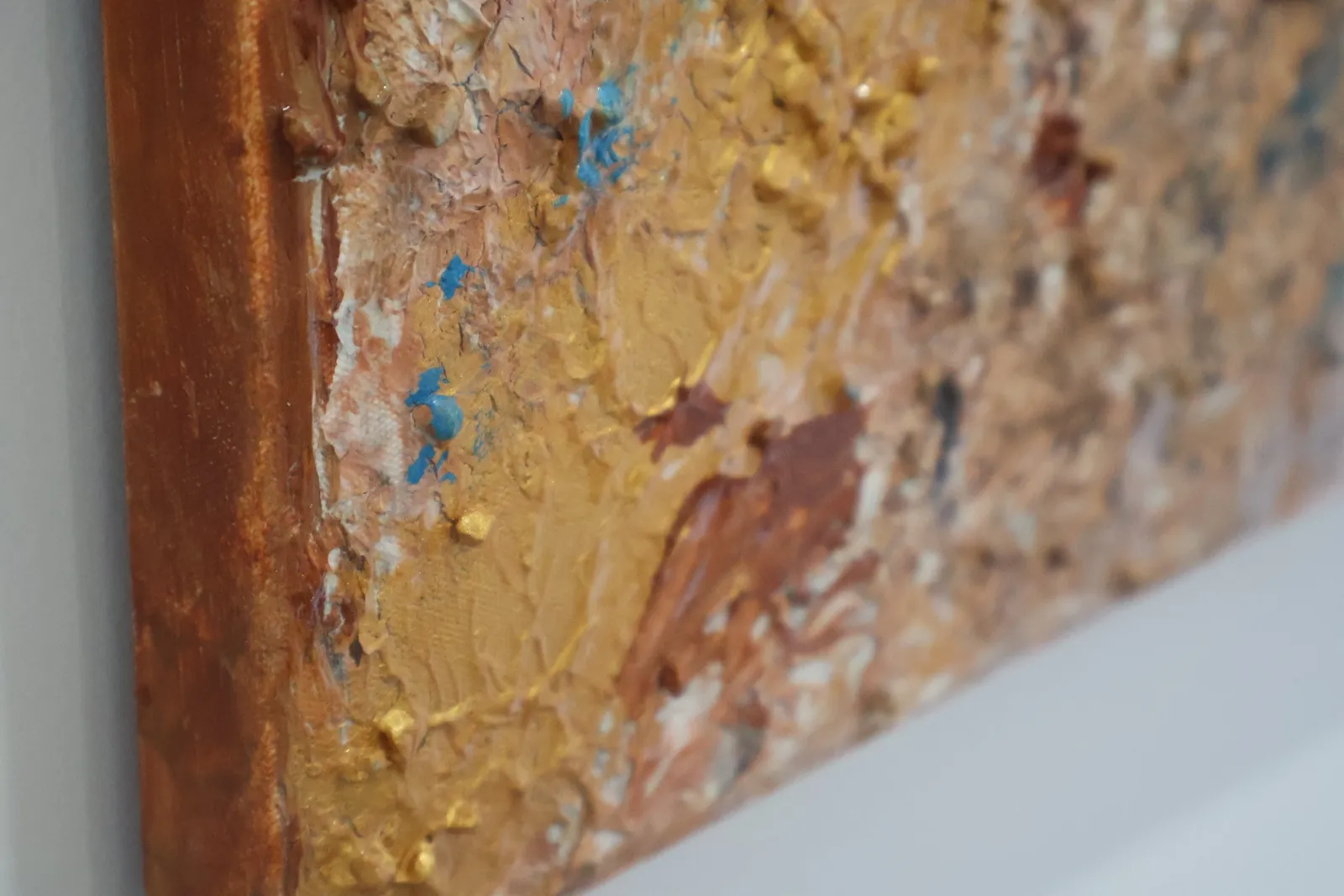
Up close, a different work appears: the relief of the paint, the layers, the small accidents, the materials. It is worth stepping in until you can see the texture and then slowly stepping back, to feel how the details come together again into a whole. That is exactly what the detail photographs of each work are for.
Follow the colour, the texture and the movement
If you would like something to guide you, ask yourself three simple questions:
- Colour: which colours dominate, and which appear only in small touches? Are they warm or cool? Is there a colour that seems to come forward?
- Texture: is the surface smooth or raised? Glossy or matt? Does it make you want to touch it?
- Movement: does your eye stay still, or is it carried from one side to the other? In a straight line, diagonally, in a circle?
It is not a test. These are simply ways of slowing down and looking for longer than the few seconds we usually give to an image.
Talk about what you see
Looking at a work with someone else is a good way of discovering more. Say out loud what you see, even if it seems like very little: “this reminds me of the sea”, “there seems to be light here”. You will find that the other person sees different things, and that neither of you is wrong. You do not need any technical vocabulary. Simple words are enough and are often the most accurate of all.
Let the work change with you
A painting that hangs in your home will be seen in the morning and at night, on good days and on bad days. It is only natural that what you see in it changes. Weeks later, you may suddenly notice a shape or a colour that had been there from the very beginning. That is one of the best things about living with original art: you never quite reach the end of the work.
If one of Karla’s works stays on your mind, go back to it, look at the details and picture it on your own wall. The rest is up to you: everyone is free to find their own story in what she paints. You can get to know the artist better in About Karla.